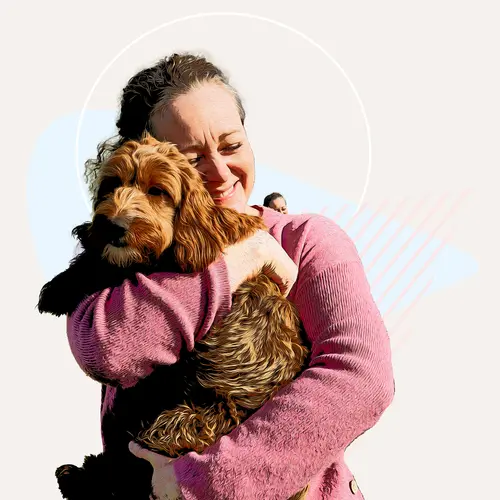

Maybe he doesn’t chase every squirrel in the yard these days. And he’s a little slower to get up to greet you when you come home. Then there’s that gray creeping into his muzzle. Your dog is getting old. But dogs are living much longer, fuller lives these days with the help of loving owners and caring veterinarians. For some tips on caring for aging dogs, we turned to Marty Becker, the nationally known veterinarian, author, and television regular, including regular spots on “Good Morning America.”
Q: At what age is my dog considered old?
A: That’s highly variable. In general, the giant breed dogs age much faster than the large breed dogs, which age much faster than the small breed dogs. A Great Dane or a mastiff can enter into the older phase of life at five or six. The medium-sized dogs, like cocker spaniels or corgis, the ones that are in the 30- to 50-pound range, we start considering them older at about age eight. Then for the smaller dogs, your Shih Tzus, the toy poodles, it’s about eight to 10 years.
Q: What are some of the physical signs that my dog is getting older?
A: Often it progresses so slowly that a lot of times people just don’t notice it. Graying around the muzzle, on the chest, on top of the head. There are more lumps and bumps and eyelid tumors, and those are just signs the immune system is starting to slip a little bit. They’re not as playful and active. They can have jutting hip bones, muscle wasting. They just don’t have a spring in their step. The stairs become forbidden, they don’t want to jump up in the back of a pickup truck any more. Their senses start getting dull -- their eyesight isn’t as good. Their hearing isn’t as good.
Q: As my dog ages, are there mental changes I should look for, too?
A: They can become less social or even more aggressive as they age. There can be house soiling accidents. They’re not as interested in their food or play.
Q: Do dogs get Alzheimer’s disease?
A: Some people call it that. Its called cognitive disorder syndrome, canine brain aging. Sleeping patterns change; they’ll sleep more during the day and be awake at night. They’ll stand by the wrong side of the door to be let out. They’ll wander into a room they typically don’t go into and act like they don’t know why they’re in there. Again, their senses are dulled. It’s like they’ve gone from a world of 3-D back to a one-dimensional world. But I’m so excited about some of the new drugs for the cognitive disorder syndrome. They’re amazing. With some dogs, it’s like throwing a light switch and they’re back to 3-D in Technicolor.
Q: What are the most common medical problems with older dogs?
A: Fifty percent of dogs over the age of 10 are going to die of cancer. That’s from the AVMA (American Veterinary Medical Association). Other common problems are renal and kidney disease, heart failure, diabetes. Look for increased or decreased thirst. Changes in their bathroom habits. A lot of time you’ll see pain of movement, or lack of movement.
Q: Do I need to change my dog’s diet as she ages?
A: We used to think that we wanted to reduce the protein for older dogs, and now we’re finding out some of them need a higher-quality protein or more protein as they age. I tell my clients we’re probably going to change what’s in your dog’s bowl five times in his lifetime, and usually one of those changes is when they’re seniors. We certainly need to put them on something that’s reduced calories, reduced fat, so they don’t get obese. Sometimes we put them on a diet for a specific disorder; if their kidneys are starting to slip, we put them on a specific diet.
Q: What are some things I can do to make it easier for my dog as he gets older?
A: Ramps and steps are a big help to get up on the couch or on the bed. Carpet runners are good if you have hardwood floors, stairs, or tile, so they don’t slip.
Have real soft bedding. A lot of people use heated orthopedic beds.
Use drinking fountains. Every creature in nature loves the sound of running water. A lot of older pets get chronically dehydrated. Fountains keep water aerated and cooler.
And heat their food up. Their sense of smell and sense of taste don’t work as well as they used to. If you’re still using dry food, you can put a little water on it or mix a little canned on it and put it in the microwave for seven to 10 seconds to release that aroma.
I also recommend a pet buddy. Dogs in multiple-pet households are sick less often, live longer, and generally are happier. Social interaction is so important. Exercise also is important. Not only do the excess pounds melt away, so do a lot of the behavior problems.
Q: Do elderly pets still require yearly vaccinations?
A: That’s a hot topic. At one time we did a one size fits all -- everybody gets the exact same thing. But we over vaccinated because we gave everybody the same thing regardless of their life stage, lifestyle, or risk in the community. If your dog is boarded or goes to dog parks, you’d better vaccinate him. But we’ve shifted from one size fits all to individualized personal pet health protocols, in which we look at medical history, current health status, life stage, lifestyle, and any emerging risks in the community to determine what, if any, vaccines are needed.
Q: Are there any new drugs or therapies that can help an old dog get back some of his spark?
A: Some of the arthritis drugs are incredible. They can take a pet that’s really suffering -- that’s not playing, is depressed, inactive, getting overweight -- and you put him on these drugs and it’s like you loaded new batteries in him.
There are other things, too. There’s a new FDA-approved drug for weight loss if you’ve done everything and you still can’t get the weight off your dog.
Older dogs get more separation anxiety. There’s a wonderful drug out called Reconcile. It’s basically Prozac in a chewable form. We have a dog that had terrible separation anxiety that we put on that and, with behavior modification, our dog is 98% better.
Q: Any supplements or vitamins I should add to my pet’s diet as he ages?
A: Sometimes there are supplements a specific pet might need, but again it’s not one size fits all. Talk to your veterinarian. Maybe your dog needs a fatty acid coat supplement or would benefit from additional calcium. But inappropriate or too many supplements can also cause problems, so it's always important to talk to your vet before starting any type of program. Personally, I'm excited about potentiated antioxidant cocktails. Now we know about free radical damage to the brain and how this may lead to cognitive disorder syndrome, like early Alzheimer's. And we know that it's not just some dogs, but most dogs that will suffer from that. If we can prevent it by starting young and middle aged dogs on these antioxidant cocktails, it may have unbelievable results.