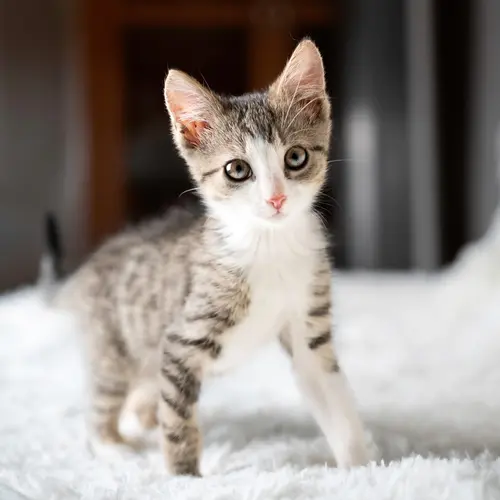

Cats and milk: In children’s stories, it always seems to be a match made in heaven. Who hasn’t seen adorable illustrations of a kitten lapping at a saucer full of cream?
As with so many romances, the one between cats and dairy isn’t quite what it’s cracked up to be. That’s because even though most cats adore a bit of milk, milk doesn’t always return the affection.
The main culprit is milk’s lactose, which many cats have trouble digesting. The result: diarrhea or stomach upset. Not exactly romantic.
Do cats and dairy ever get along? Can cats drink milk? Here is what cat nutritionists and veterinarians told WebMD.
Cats and Dairy Fact 1: Lactose Intolerance Is the Norm
Just like people, cats can be lactose intolerant. And although we tend to think that’s a problem, it’s actually completely normal, says Linda P. Case, MS, adjunct assistant professor at the University of Illinois College of Veterinary Medicine and author of The Cat: Its Behavior, Nutrition, and Health.
“The only time animals are exposed to lactose is when they’re babies -- in their mother’s milk," Case says.
To digest lactose, a milk sugar, the human and feline digestive systems must contain the enzyme lactase. We have plenty of this enzyme in our systems at birth, and it helps us thrive on our mother’s milk.
But as we grow up, it’s normal for people and cats to begin producing less lactase. Less lactase means less ability to digest lactose. The result may eventually be lactose intolerance.
When a lactose-intolerant cat drinks milk, the undigested lactose passes through the intestinal tract, drawing water with it, according to the Cornell University College of Veterinary Medicine's web site. Bacteria in the colon also ferment the undigested sugars, producing volatile fatty acids.
All that activity might lead to an upset tummy and induce vomiting. But the most common symptom of lactose intolerance in cats is diarrhea, usually within eight to 12 hours, says Susan G. Wynn, DVM, CVA, CVCH, an animal nutritionist in Atlanta and co-author of the Manual of Natural Veterinary Medicine.
Cats and Dairy Fact 2: Many Cats Can Drink Milk
Most of us have probably given our cats a bit of milk and never noticed a problem. That’s because some cats tolerate milk just fine, Wynn tells WebMD.
How can you tell? Try offering your cat a tablespoon or two of milk. If you don’t see symptoms within a day, chances are good your cat will do fine with milk as an occasional treat.
Still, most veterinarians don't recommend it. Cats don’t need milk, and the potential problems outweigh the potential benefits.
Remember that treats of all sorts -- such as tuna, meat, cheese, or other “people foods” -- should make up no more than 5% to 10% of your cat’s diet. The rest of your cat's calories should come from a high-quality, nutritionally complete cat food.
If you’re not sure what that means for your cat, talk to your veterinarian. Also, remember that offering table food to a cat often teaches a cat to be finicky.
Cats and Dairy Fact 3: Yogurt and Cheese May Be Easier to Digest
Sometimes a cat that can’t tolerate milk may have no problem with other forms of dairy, like yogurt, cheese, butter, or ice cream. That’s because “different forms of dairy food contain varying amounts of lactose,” Wynn says.
There are two reasons for that. Foods like yogurt and ice cream are often diluted with other things, such as water or added fats. They may also be cultured, meaning microorganisms have digested part of the lactose.
So if you want to give a sensitive feline a bit of dairy, the chances of an intolerance reaction are less with cheeses, yogurts, and other cultured dairy.
Cats and Dairy Fact 4: Kittens Don't Need Cow’s Milk
Despite those charming storybook illustrations, “cow’s milk is completely inadequate for kittens,” Wynn says.
Though kittens have lactase in their system, there’s just not enough of it to tackle the lactose overload found in cow’s milk.
But lactose isn’t the only problem. “The casein to whey proportions are all wrong in cow’s milk too,” Case tells WebMD.
If your kitten is young and still needs mother’s milk, you can try a milk replacer made specifically for kittens.
Sold by vets or found in pet stores, cat milk replacers often contain cow’s milk that’s “been modified to approach as closely as possible the nutrient composition of cat’s milk,” Case says. That means adjusted casein and whey ratios, and a reduction in the amount of lactose. If you’re fostering or raising an orphaned kitten, “milk replacers formulated specifically for kittens are definitely a way to go.”
For adult cats, treat milk replacers like any other dairy product: You can offer small amounts as a treat.
The same goes for dairy substitutes designed for humans, such as soy and lactose-free milk. You can give these as treats, but “in general, there is no reason to use them unless the cat has developed an unusual taste for them," Wynn says.
Cats and Dairy Fact 5: Cats Need Water, First
No matter how well-tolerated cow’s milk is, your cat will always need plenty of fresh, clean water. According to the Cornell University College of Veterinary Medicine's web site, water helps your cat:
- Regulate body temperature
- Digest food
- Eliminate waste
- Lubricate tissue
- And allows salt and other electrolytes to pass through the body
To encourage your cat to drink water, try placing several bowls of different depths around the house. Many cats also like flowing water, Case says. If yours is one, you can find kitty fountains at most pet stores.