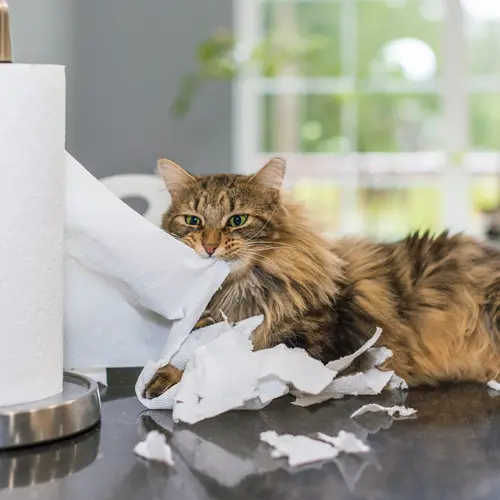

Most cats are meticulous groomers, but what happens when the behavior goes into overdrive? For a variety of reasons, some cat licking, scratching, and chewing behaviors become compulsive, which can annoy you and damage your pet’s skin and coat.
If your cat is scratching, licking, or chewing themselves compulsively, it is likely you regularly catch them in the act. But if you don’t, your first clue may be the disappearance of your cat’s fur, often in strips along their back, stomach, or along the inner side of the hind legs. Cats with self-mutilating behaviors may also cause red, irritated areas called hot spots to form, but they are less likely than dogs to do so.
Although compulsive cat scratching, licking, or chewing behaviors can develop in any animal, they are more commonly observed in Siamese cats and other Oriental breeds.
Because there are a number of medical problems that may result in scratching and licking behaviors, be sure to consult with your veterinarian to help determine the cause and the best course of action.
Why Do Cats Compulsively Scratch, Lick, or Chew?
Parasites.Fleas are often the culprits behind compulsive cat scratching or cat licking behaviors. Because cats are excellent groomers, they may actually remove all traces of fleas. If you notice your cat licking their lower back obsessively, with or without scabs on the neck, it is a sign that fleas might be causing the problem. Ticks, mites, and ringworm can also prompt scratching, licking, or chewing.
Allergies. Just as some people develop skin irritations in response to certain foods or environmental triggers, cats may have itchy, irritated skin if they are allergic to something in their environment.
Dry skin. Dry winter air or nutritional inadequacies can contribute to dry, flaky skin that gets your cat started licking or scratching in search of relief.
Pain. If you notice your cat licking or biting at the same spot over and over again, it could be that they are experiencing pain or discomfort in that area.
Boredom, anxiety, or compulsive disorder. Compulsive cat chewing, scratching, or licking behaviors often develop in cats who are bored, stressed, or anxious. These mental disorders are more likely to occur in indoor cats, which may be due to the fact that they receive less exercise and excitement than outdoor cats. Compulsive disorders often begin when there are changes in a cat’s environment, including a new animal or baby in the house or a move to a new location. Also, behaviors that started in response to a medical problem sometimes persist as compulsions after the condition is resolved.
Treatment for Your Cat’s Scratching, Licking, and Chewing
Eliminating parasites. Because it can be difficult to diagnose flea infestation in cats, some veterinarians recommend trying reliable flea control products purchased from a veterinary office for six to eight weeks to see if it reduces the incidence of licking, scratching, or chewing. Similarly, treating mites or other parasites, if present, can eliminate your cat’s discomfort and the problem behaviors.
Changing foods. Putting cats that are scratching or chewing on an exclusion diet for up to 12 weeks is a good way to find out whether food allergies are the problem. You may have to try several diets before you find one that works. Veterinarians may also prescribe the addition of certain fatty acids or other nutritional supplements if dry skin is to blame for your cat’s incessant scratching and licking. No other foods or treats should be offered during an exclusion diet trial.
Using medication. Depending on the extent of skin damage your cat has caused by licking, chewing, or scratching, your veterinarian may prescribe the use of steroids, antihistamines, and antibiotics. And some compulsive cat behaviors caused by psychological factors can be addressed with medications such as amitriptyline (which helps fight anxiety and also functions as an antihistamine), clomipramine (an anti-anxiety medication), and fluoxetine (an antidepressant).
Addressing anxiety or boredom. If you and your vet determine that there is no physical cause for your pet's behaviors, there are things you can do to improve your cat’s state of mind. Making sure your cat feels safe, loved, and comfortable in your home is important, as is providing adequate stimulation and exercise. You may find that desensitizing your cat by slowly and carefully exposing them to things they fear can help. Take baby steps if you try this so as not to overwhelm your cat and make the compulsive licking, scratching or biting worse. Counter-conditioning -- by training your cat to associate something pleasurable, like a treat, with something they fear may -- also may ease their stress and anxiety. Many times, boredom licking is improved by adding another cat or pet. But there is always the risk that the second cat could be a new stress in your pet's environment that could make the hair loss worse.